Bianca Becker · 25 October 2026
Exploring Sensor-Driven Feedback Loops in Real-Time Alloy Shaping Processes
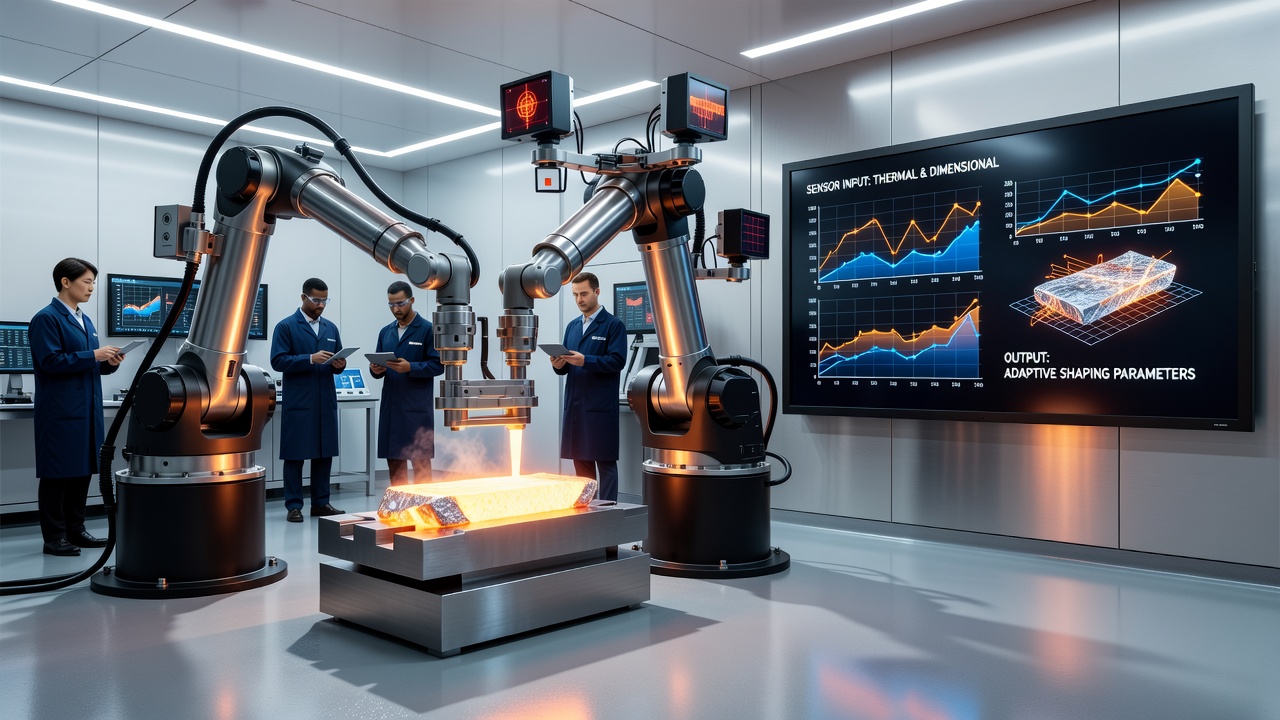
Manufacturing facilities now integrate sensor arrays directly into alloy shaping lines where temperature gradients, strain rates, and microstructural changes occur within milliseconds of each other, and feedback mechanisms adjust hydraulic presses, induction heaters, and cooling jets without operator intervention. Data streams from these arrays feed into control algorithms that maintain target parameters across batches of titanium, nickel-based superalloys, and high-strength aluminum grades.
Core Components of Sensor Integration
Thermocouples embedded in dies capture surface and subsurface temperatures while laser interferometers track dimensional changes in real time, and strain gauges mounted on tooling report mechanical loads that correlate with grain refinement patterns. These inputs combine in programmable logic controllers that recalculate setpoints for servo motors and fluid valves several hundred times per second. Research conducted at facilities equipped with such systems shows cycle time reductions of 12 to 18 percent when closed-loop control replaces open-loop sequences, according to records maintained by the National Institute of Standards and Technology.
Optical emission spectrometers positioned along conveyor paths verify chemical composition at intermediate stages, allowing automatic rejection of off-spec billets before they reach final forming stations. Acoustic emission sensors detect micro-crack initiation during high-strain operations and trigger immediate pressure reductions that prevent propagation. Observers note that the combination of these modalities creates a multi-layered data environment where each sensor type compensates for limitations in the others.
Process Dynamics in High-Precision Forging
Alloy billets enter induction coils where power modulation responds to core temperature readings taken every 50 milliseconds, and subsequent transfer to forging presses occurs only after infrared cameras confirm uniform heating profiles. During deformation, piezoelectric force sensors on ram surfaces transmit signals that adjust ram velocity to keep flow stress within predetermined windows, thereby preserving intended texture development. In October 2026 several production sites began reporting integration of wireless sensor nodes that eliminate cable routing constraints around hot tooling, and early performance logs indicate signal latency remains below 5 milliseconds even under electromagnetic interference from nearby motors.
Quench systems downstream employ variable-flow nozzles whose opening angles change based on pyrometer data collected from multiple surface zones, and this adjustment prevents residual stress concentrations that previously required secondary straightening operations. Engineers at facilities using these loops document scrap rate drops from 4.2 percent to 1.8 percent over six-month monitoring periods, with the largest gains appearing in thin-walled aerospace components.
Data Processing and Algorithmic Control
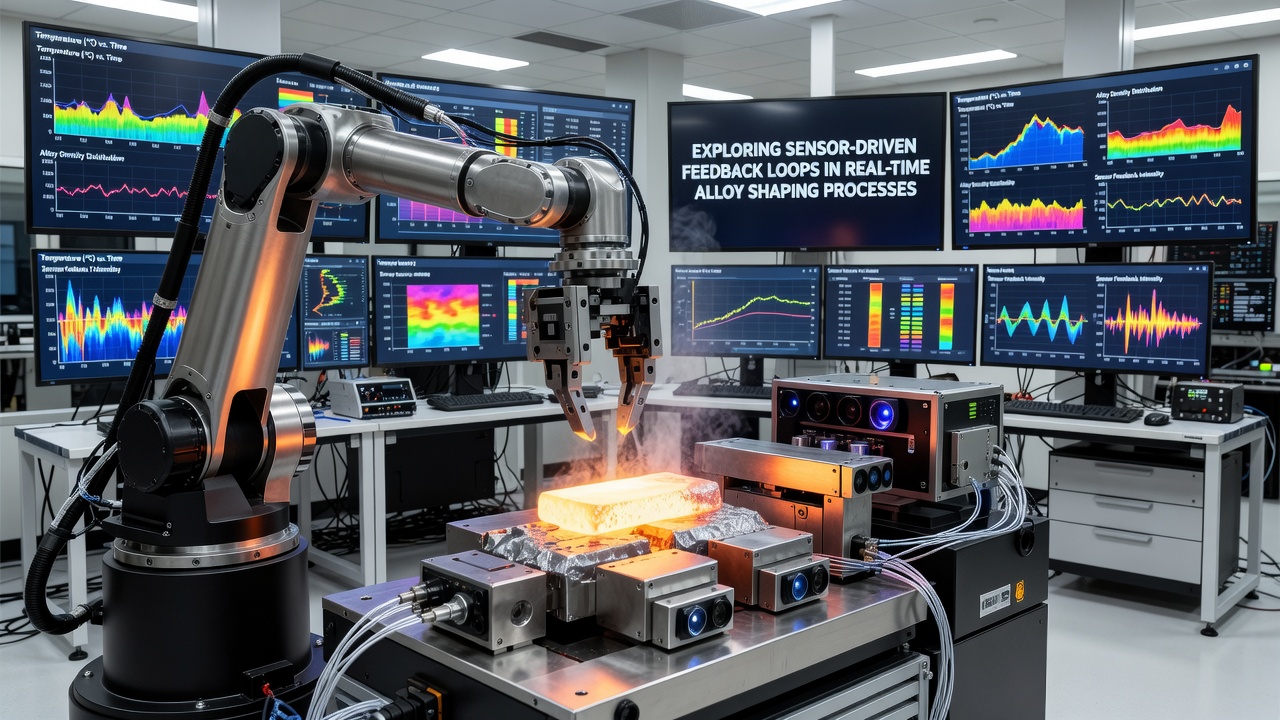
Edge computing units located on the factory floor preprocess raw signals to remove noise before forwarding filtered datasets to centralized servers that run physics-informed neural networks, and these models predict microstructural evolution based on current strain and thermal histories. When predicted grain sizes deviate from specifications, the system alters subsequent pass schedules on multi-stage rolling mills without halting production. Figures released by the Advanced Manufacturing Research Centre in Canada reveal that plants adopting hybrid physics-machine learning controllers achieve repeatability improvements measured at 22 percent tighter tolerance bands on final part dimensions.
Calibration routines run automatically at shift changes using reference samples whose known properties allow verification of sensor drift, and any detected offsets propagate through the control software to update compensation factors. This self-diagnostic capability reduces unplanned downtime attributed to measurement errors. Operators receive summarized dashboards that highlight only deviations exceeding statistical control limits rather than continuous raw streams, which keeps human oversight focused on exception handling.
Industrial Deployment Examples
Automotive suppliers producing suspension knuckles from 6061 aluminum now route every forging through sensor-equipped trim presses that measure flash thickness and automatically modify die lubrication volume for the next cycle, and similar setups appear in medical implant manufacturing where cobalt-chrome alloys demand sub-millimeter accuracy on articular surfaces. European aerospace contractors have documented parallel installations where electron beam melting chambers incorporate in-situ pyrometry that adjusts beam power to maintain melt pool dimensions within 0.3 millimeters across build layers.
Supply chain documentation requirements increasingly specify sensor log retention for traceability, and regulatory bodies in multiple jurisdictions accept these digital records as evidence of process consistency when certifying critical components. The resulting datasets also support continuous improvement programs that correlate specific sensor signatures with downstream performance metrics such as fatigue life.
Conclusion
Sensor-driven feedback loops continue to reshape real-time alloy shaping by linking direct measurements of physical states to immediate corrective actions across heating, deformation, and cooling stages. Facilities that implement these systems record measurable gains in yield, repeatability, and documentation completeness, while ongoing hardware refinements such as wireless nodes and edge analytics extend the range of viable applications. Continued deployment across sectors demonstrates that the underlying control principles scale from laboratory prototypes to high-volume production environments without requiring fundamental redesign of existing press and mill infrastructure.